
What are the most critical technology updates in 2026?
The primary tech updates in 2026 center on autonomous Agentic AI systems, enterprise adoption of Post-Quantum Cryptography, commercially viable spatial computing hardware, energy-efficient neuromorphic silicon, and 5G-Advanced deployment. These updates mark a transition from experimental AI and cloud compute to hyper-automated, energy-optimized, and quantum-resistant infrastructure.
Key Takeaways & Core Highlights
- Agentic AI transforms automation by moving from text generation to autonomous workflow execution and real-time decision-making.
- Post-Quantum Cryptography (PQC) shifts from regulatory framework to mandatory hardware and software implementation across critical data pipelines.
- Neuromorphic chips and silicon photonics address the massive energy consumption bottleneck of modern AI training and edge compute.
- Spatial computing matures into enterprise workflows, blending CAD, digital twins, and immersive collaboration beyond consumer gaming.
The enterprise landscape has shifted from the “wait-and-see” approach of the early generative AI era to a high-stakes race for operational efficiency and structural resilience. As we navigate the most significant tech updates in 2026, the focus has moved beyond simple LLM integration toward the deployment of autonomous systems that can execute complex, multi-step workflows without constant human oversight. Organizations that fail to align their digital infrastructure with these shifts risk becoming obsolete in an environment defined by quantum-ready security and AI-native automation.
This year represents a pivotal inflection point where theoretical breakthroughs in silicon architecture and cryptography finally meet the practical demands of global enterprise scale. Whether you are a CTO re-architecting legacy data pipelines or a product lead integrating spatial workflows into your stack, understanding these technical milestones is no longer optional—it is the prerequisite for sustained competitive advantage.
In the following sections, we dissect these technological pillars, providing a strategic roadmap for implementation and risk mitigation. We will move past the hype cycle to examine the real-world benchmarks, hardware requirements, and integration frameworks that define the current enterprise tech ecosystem.
The Global Landscape of Major Tech Updates in 2026
In 2026, tech updates have shifted from speculative generative AI experimentation toward highly optimized, agent-driven architectures prioritized by energy-conscious infrastructure. The landscape is defined by the transition from model-centric development to system-wide efficiency, where enterprise quantum readiness and sustainable compute power serve as the primary pillars for competitive global digital transformation.
Macro Drivers Shaping 2026 Technology Milestones
The primary macro drivers defining the 2026 technological epoch are the maturation of autonomous agentic workflows and the decoupling of model performance from raw parameter count. Unlike the “bigger is better” paradigm of 2023-2024, the current landscape emphasizes “inference-time compute” and specialized small language models (SLMs). Organizations are no longer measuring success by the sheer capability of a model, but by the reliability and latency of multi-step autonomous agents capable of executing complex business logic without human intervention.
Furthermore, regulatory frameworks, such as the evolving EU AI Act, have forced a pivot toward “explainable AI” (XAI) and data provenance. Enterprises are now mandated to audit the entire supply chain of their models, from training data lineage to the carbon footprint of their GPU clusters. This regulatory pressure has transformed “green computing” from a CSR initiative into a hard-coded technical requirement for infrastructure procurement.
The Convergence of Compute Power, Energy Constraints, and AI
We have reached a physical ceiling where the proliferation of AI-driven workloads is outpacing global grid capacity. In 2026, the tech industry is witnessing a “Power-to-Performance” pivot. Data center operators are increasingly turning to on-site modular nuclear reactors and advanced liquid cooling systems to support the thermal design power (TDP) requirements of next-generation AI accelerators. The industry is moving away from generic cloud sprawl toward localized, energy-efficient edge computing to mitigate latency and energy loss.
| Metric | 2024 Industry Standard | 2026 Industry Standard |
|---|---|---|
| Primary AI Focus | Raw Parameter Scaling | Agentic Workflow Efficiency |
| Infrastructure Priority | GPU Cloud Availability | Energy-Constrained Compute |
| Model Deployment | Massive LLMs | Specialized SLMs & Neuro-symbolic AI |
| Sustainability | Carbon Offsetting | Energy-Aware Model Quantization |
Strategic hardware procurement is now governed by the “Performance per Watt” ratio rather than peak TFLOPS. Organizations that fail to optimize their inference pipelines face prohibitive operational costs, leading to a massive surge in the adoption of model quantization and pruning techniques, which allow high-performance models to run on significantly lower energy profiles.
Key Architectural Shifts in Enterprise Infrastructure
The enterprise stack has undergone a radical architectural shift toward “Quantum-Ready Hybrid Architectures.” While full-scale fault-tolerant quantum computing remains in the R&D phase, enterprises are currently implementing post-quantum cryptography (PQC) to protect data pipelines against future decryption threats. This is a foundational update that every CISO must manage in 2026 to ensure long-term data integrity.
Beyond security, the infrastructure layer is evolving into a “Composable Data Fabric.” This architecture allows disparate AI agents to query, verify, and execute tasks across siloed enterprise databases in real-time. This shift is characterized by three distinct movements:
- Decentralized Compute Nodes: Transitioning from centralized hyperscale clouds to distributed edge nodes to minimize energy transmission loss.
- Neuro-Symbolic Integration: Combining the probabilistic nature of neural networks with the deterministic logic of symbolic AI to reduce “hallucinations” in enterprise environments.
- Autonomous Orchestration: Implementing self-healing infrastructure layers that dynamically reallocate resources based on real-time task priority rather than static scheduling.
This structural evolution marks the end of the “experimentation phase” and the beginning of the “operationalization phase,” where the stability of the system is held in higher regard than the novelty of the algorithm.
Breakthroughs in Autonomous Agentic AI and Cognitive Systems
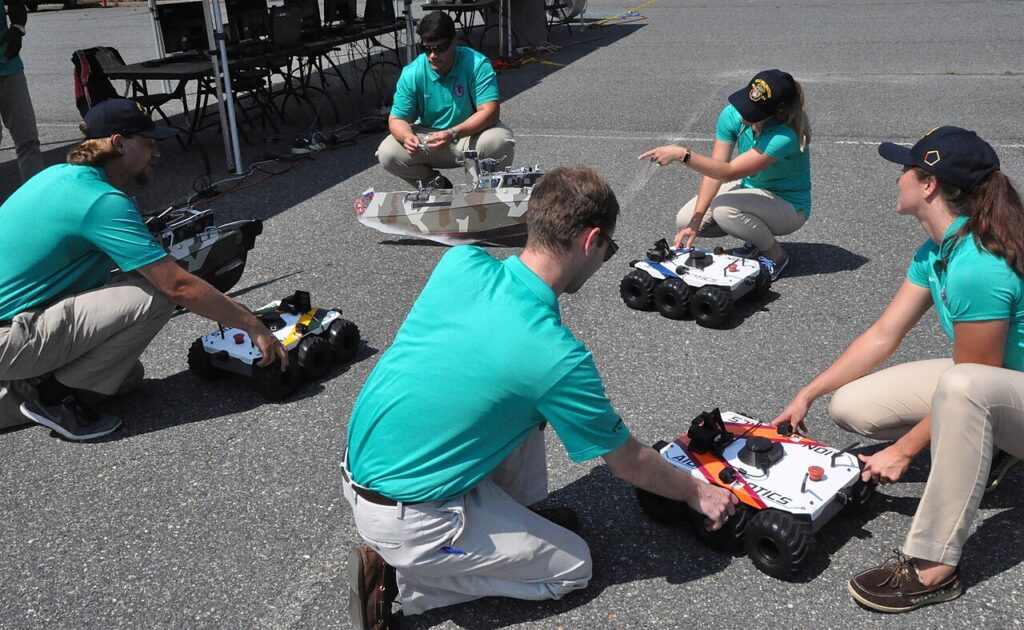
Among the defining tech updates in 2026 is the rapid shift from conversational large language models (LLMs) to fully autonomous agentic workflows. Rather than merely generating text responses or code snippets, 2026 cognitive systems dynamically plan multi-step execution paths, call external APIs, evaluate environmental feedback, and self-correct in real time to complete complex business processes with minimal human oversight.
From Prompt Engineering to Action-Oriented AI Agents
The era of manual prompt engineering has evolved into the era of programmatic agent orchestration. While early enterprise AI deployments relied heavily on human operators crafting precise system prompts, key enterprise tech updates in 2026 feature action-oriented architectures built on continuous Reasoning-Action (ReAct) loops and Monte Carlo Tree Search (MCTS) path selection. Modern cognitive agents do not simply generate passive output; they actively operate within secure compute sandboxes, query relational and vector databases, interact with enterprise software through normalized API layers, and coordinate with specialized sub-agents.
This operational shift is driven by multi-agent delegation frameworks. In a modern enterprise software pipeline, a high-level orchestrator agent breaks down a high-level directive—such as “reconcile Q3 supply chain discrepancies across vendor invoices”—into isolated sub-tasks. It delegates inventory verification to a specialized database agent, cross-checks currency valuations using real-time API tools, and executes ledger updates via automated ERP connectors. By transforming passive predictive text models into active autonomous software agents, organizations achieve true process automation rather than simple knowledge retrieval.
Furthermore, agentic software platforms now leverage persistent long-term memory architectures. By combining hierarchical graph databases with real-time vector embeddings, cognitive agents retain state across long-running operational workflows. They recall past execution failures, store enterprise-specific operational context, and continuously optimize their execution strategies without requiring model retraining, significantly lowering total cost of ownership (TCO) for enterprise AI deployments.
Multi-Modal Reasoning and Real-Time Decision Engines
Early multi-modal systems treated vision, audio, and text as distinct modalities that required separate tokenization and processing chains. Crucial hardware and algorithmic tech updates in 2026 have unified multi-modal reasoning into single-stage, native multi-modal architectures. These decision engines process raw video streams, multi-channel audio, sensor telemetry, and structured database transactions concurrently, yielding inference latencies under 50 milliseconds.
This sub-50ms latency threshold allows cognitive systems to act as real-time decision engines in physical and mission-critical environments. In smart manufacturing facilities, native multi-modal agents analyze real-time spatial video feeds alongside vibration sensor telemetry to instantly adjust robotic assembly lines or halt operations before mechanical failures occur. Similarly, in algorithmic trading and autonomous logistics, multi-modal decision engines continuously ingest unstructured news feeds, satellite imagery, and live telemetry to adapt operational strategies autonomously.
| Architectural Dimension | Generative AI Era (2023–2024) | Agentic Cognitive Era (2026) |
|---|---|---|
| Core Operational Paradigm | Passive retrieval and response generation. | Autonomous multi-step execution and goal completion. |
| Inference Latency & Speed | Batch processing; high latency (1,000ms+). | Sub-50ms native multi-modal real-time streaming. |
| Tool Integration | Basic function calling via manual orchestration. | Dynamic tool creation, selection, and self-healing execution. |
| Memory Architecture | Transient context windows (stateless). | Persistent state, episodic memory, and graph-based context. |
| Governance Control | Post-hoc text filtering and output guardrails. | Deterministic state machines, dynamic sandboxing, and policy enforcement. |
Managing Governance and Non-Deterministic Behaviors in AI Pipelines
As AI agents transition from generating answers to taking autonomous actions—such as modifying production databases, issuing financial refunds, or altering network routing tables—managing non-deterministic risk becomes the primary bottleneck for enterprise adoption. A single hallucinated function parameter in an autonomous system can trigger severe operational disruption or non-compliance with data privacy frameworks like the EU AI Act.
To mitigate these risks, modern technical updates in 2026 emphasize multi-layered governance frameworks that enforce policy restrictions directly over agentic action space. Enterprise architectures isolate non-deterministic AI decisions within strict deterministic boundaries. Organizations implement semantic tracing via open observability frameworks like OpenTelemetry, capturing every step of an agent’s internal chain-of-thought, tool invocation, and API response for real-time auditability.
Deploying resilient, enterprise-grade agentic systems requires a structured governance and control framework:
- Deterministic Action Guardrailing: Wrap agent interfaces with strict runtime schemas (e.g., JSON Schema validation and type-safe API proxies) that prevent agents from executing commands outside pre-approved parameter ranges.
- Stateful Memory Auditing and Rollback: Log every agent memory state modification to an append-only ledger, enabling enterprise systems to instantly roll back database state changes if an agent path deviates from expected parameters.
- Dynamic Human-in-the-Loop (HITL) Thresholds: Implement automated risk-scoring engines that dynamically evaluate action severity. Low-risk actions (e.g., querying data or generating internal drafts) run autonomously, while high-risk actions (e.g., executing transactions above financial thresholds) automatically pause execution and route to human managers for approval.
- Continuous Adversarial Red-Teaming: Deploy automated red-teaming sub-agents that continuously probe active pipelines for jailbreaks, prompt injection, tool-abuse vectors, and unintended loop conditions prior to push-to-production deployment.
By coupling native multi-modal execution engines with rigorous governance protocols, enterprise tech updates in 2026 provide the architectural blueprint necessary to safely deploy autonomous cognitive agents at scale across hyper-regulated industries.
Hardware Innovations: Neuromorphic Computing and Silicon Photonics
Hardware tech updates in 2026 are defined by the convergence of neuromorphic computing, silicon photonics, and open-source RISC-V processors. These breakthroughs directly resolve critical energy efficiency and interconnect thermal throttles in hyperscale AI data centers, replacing traditional Von Neumann architectures with brain-inspired spiking neural networks and light-based optical data transfer.
Overcoming the Von Neumann Bottleneck with Neuromorphic Chips
For over seven decades, digital computing has relied on the Von Neumann architecture, where processing units (CPUs/GPUs) and memory modules (RAM/HBM) remain physically separated. In high-density artificial intelligence workloads, shuffling massive parameter matrices continuously between memory and processing cores creates a severe memory wall—a physical constraint known as the Von Neumann bottleneck. This data movement accounts for up to 80% of the energy consumed by modern AI accelerator chips, generating massive thermal overhead while stalling compute pipelines.
Among the critical hardware tech updates in 2026, commercially deployed neuromorphic chips represent a radical architecture shift. Neuromorphic systems mimic the biological neural structure of the human brain by co-locating compute and memory directly within artificial neurons and synapses. Instead of processing continuous, power-hungry mathematical operations synchronously across clock cycles, neuromorphic processors utilize Spiking Neural Networks (SNNs). Processing occurs asynchronously and event-driven: a neuron fires an electrical impulse (spike) only when incoming sensory or computational data crosses a specific threshold.
This event-driven compute model yields dramatic efficiency gains across enterprise edge workloads and continuous time-series analytics:
- Extreme Energy Efficiency: Dynamic power consumption scales down by 100x to 1,000x compared to standard GPUs, operating on milliwatts rather than hundreds of watts during idle or sparse data states.
- Ultra-Low Latency Inference: On-device processing eliminates round-trip cloud calls, executing real-time spatial vision and acoustic processing in sub-millisecond windows.
- Continuous On-Chip Learning: Neuromorphic substrates update localized synaptic weights dynamically without requiring full backpropagation runs across external memory banks.
Silicon Photonics: Accelerating Data Transfer and Reducing Thermal Output
As AI clusters scale past hundreds of thousands of interconnected accelerator nodes, traditional copper-based interconnects (such as PCIe lanes and high-speed copper DAC cables) have reached physical limits. High-frequency electrical signals over copper suffer from severe attenuation, latency degradation, and massive heat generation. At scale, heat dissipation from electrical interconnects threatens to cap the total density of hyperscale data centers.
To break through this thermal throttle, silicon photonics has moved into mainstream fabrication. By integrating miniature semiconductor lasers, optical waveguides, and phase modulators directly onto silicon die substrates, silicon photonics converts electrical data into light signals (photons) for chip-to-chip and rack-to-rack communication. By adopting Co-Packaged Optics (CPO), chipmakers mount the optical engine directly onto the same substrate as the compute ASIC or GPU, bypassing multi-inch copper traces entirely.
| Performance Vector | Traditional Copper Interconnects | Silicon Photonics (CPO) | 2026 Impact Differential |
|---|---|---|---|
| Interconnect Bandwidth Density | ~1.6 Tbps per connector footprint | > 3.2 to 6.4 Tbps per optical die edge | 2x – 4x throughput increase |
| Energy Consumption | ~15–20 picojoules per bit (pJ/bit) | < 3–5 picojoules per bit (pJ/bit) | ~75% reduction in link power consumption |
| Thermal Output & Dissipation | Extreme thermal concentration on trace lines | Minimal heat footprint; immune to EMI | Significantly reduces liquid cooling overhead |
| Physical Transmission Reach | Limited to < 2 meters at 100Gb/s per lane | Up to 2 kilometers without signal degradation | Enables disaggregated, datacenter-scale compute pools |
By replacing copper traces with photonic lightpipes, hyperscale cloud providers running high-performance training clusters can operate at near-zero signal latency while sharply reducing operating costs associated with active liquid cooling and thermal management infrastructure.
The Expansion of Open-Source Hardware via RISC-V Architectures
Parallel to physical semiconductor breakthroughs, the ecosystem surrounding the open-source RISC-V instruction set architecture (ISA) has reached maturity. Historically, chip design was dominated by proprietary x86 and ARM architectures, requiring multi-million dollar licensing agreements, restrictive IP contracts, and rigid execution pipelines that hindered hyper-specialized accelerator design.
In 2026, enterprise tech updates highlight RISC-V as the foundational blueprint for bespoke AI silicon and domain-specific processors. Because RISC-V is completely open-source and modular, system architects can implement core base instruction sets while appending custom vector and matrix math extensions directly tuned for local neural network execution.
- Custom Matrix Acceleration: Engineering teams design microcontrollers that strip out legacy legacy instructions, allocating maximum silicon real estate to tensor processing units customized for specific model sizes.
- Supply Chain Independence and Sovereignty: Geopolitical hardware restrictions have driven international tech consortia and sovereign enterprise entities to build vendor-neutral silicon stacks based on RISC-V specifications.
- Unified Software-Hardware Co-Design: Open ISA transparency allows compiler frameworks (like MLIR and TVM) to optimize code directly down to bare-metal execution units, eliminating abstraction layers that degrade run-time performance.
From embedded neuromorphic sensors at the far edge to massive, photonically-linked computing fabrics in enterprise datacenters, open hardware specifications combined with light-speed interconnects are reshaping the boundaries of compute infrastructure.
Essential Enterprise Tech Updates in 2026: Quantum Security and PQC

Among the most urgent enterprise tech updates in 2026 is the migration to Post-Quantum Cryptography (PQC). As quantum computing capabilities approach the threshold needed to break legacy asymmetric encryption (RSA and ECC), organizations must modernize their cryptographic infrastructure with NIST-standardized quantum-resistant algorithms to safeguard sensitive data from retroactive decryption threats.
Implementing NIST Post-Quantum Cryptography Standards
The enterprise cybersecurity landscape in 2026 is anchored by the formal rollout of the National Institute of Standards and Technology (NIST) Post-Quantum Cryptography standards. Following years of rigorous cryptanalytic evaluation, the transition from classical public-key cryptography—primarily RSA, ECDSA, and ECDH—to lattice-based and hash-based algorithms is no longer theoretical; it is a regulatory and operational mandate. Enterprise architecture teams must now operationalize FIPS 203 (ML-KEM, based on Module-Lattice-Based Key-Encapsulation Mechanism), FIPS 204 (ML-DSA, for digital signatures), and FIPS 205 (SLH-DSA, stateless hash-based signatures).
Replacing mathematical paradigms built on integer factorization and discrete logarithms introduces fundamental engineering challenges. Lattice-based algorithms require significantly larger public key sizes and ciphertexts compared to classical elliptic curve cryptography. For instance, while an ECC P-256 public key requires just 64 bytes, an ML-KEM-768 public key spans 1,184 bytes, with a ciphertext size of 1,088 bytes. This exponential jump in data overhead impacts network latency, packet fragmentation, and memory allocations across microservice mesh architectures and edge deployments.
| Algorithm / Standard | Cryptographic Type | Public Key Size | Ciphertext / Signature Size | Primary Enterprise Use Case |
|---|---|---|---|---|
| RSA-3072 (Legacy) | Integer Factorization | 384 bytes | 384 bytes | Deprecated key exchange & signatures |
| ECDH / ECDSA P-256 (Legacy) | Elliptic Curve | 64 bytes | 64 bytes | Deprecated TLS handshakes & mobile API signing |
| ML-KEM-768 (FIPS 203) | Module Lattice | 1,184 bytes | 1,088 bytes | Quantum-safe TLS 1.3 key encapsulation & VPNs |
| ML-DSA-65 (FIPS 204) | Module Lattice | 1,952 bytes | 3,293 bytes | General-purpose enterprise digital signatures & PKI |
| SLH-DSA-SHA2-128s (FIPS 205) | Stateless Hash-Based | 32 bytes | 7,856 bytes | High-security firmware signing & long-term root certs |
To successfully integrate these standards, enterprise technology leaders must assess computational overhead across hardware platforms. While ML-KEM demonstrates exceptional speed during key generation and encapsulation—often outperforming classical RSA-3072—the increased key payload requires infrastructure updates. Network hardware, load balancers, and Web Application Firewalls (WAFs) must be tuned to handle larger Maximum Segment Sizes (MSS) and prevent TCP packet fragmentation during TLS handshakes.
Preparing PKI and TLS Stack for the Harvest-Now-Decrypt-Later Paradigm
The imperative for immediate PQC adoption is driven by the “Harvest-Now-Decrypt-Later” (HNDL) attack strategy executed by nation-state threat actors and sophisticated cybercrime syndicates. Adversaries are actively capturing and storing high-value, encrypted enterprise communication streams—including intellectual property, trade secrets, confidential customer records, and state defense intelligence—from public internet backbones. Once a Cryptanalytically Relevant Quantum Computer (CRQC) becomes operational, these intercepted datasets will be decrypted retroactively.
Mitigating the HNDL risk requires immediate overhaul of the enterprise Public Key Infrastructure (PKI) and Transport Layer Security (TLS) termination stacks. CISOs cannot wait for full, native post-quantum deprecation of legacy infrastructure; instead, 2026 enterprise tech updates mandate the deployment of hybrid cryptographic schemes. Hybrid TLS 1.3 implementations combine a classical key exchange algorithm (such as X25519) with a post-quantum key encapsulation mechanism (such as ML-KEM-768) within a single handshake protocol.
This dual-layered architecture ensures that even if a implementation flaw is discovered in newly standardized PQC algorithms, security defaults back to proven classical math. Conversely, if a quantum computer decrypts the classical layer, the post-quantum layer maintains confidentiality. Key steps for upgrading the TLS stack include:
- Upgrading Edge Controllers and Service Meshes: Upgrading proxy servers (e.g., Envoy, NGINX) to software builds supporting OpenSSL 3.x or BoringSSL with quantum-hybrid cipher suites enabled by default.
- Modernizing Hardware Security Modules (HSMs): Replacing legacy HSMs or updating firmware to hardware platforms capable of native cryptographic operations for lattice-based algorithms and expanded key storage memory.
- Internal PKI Re-issuance: Transitioning internal Certificate Authorities (CAs) toward hybrid or dual-cert architectures. Internal zero-trust microservice-to-microservice traffic (mTLS) must be prioritized based on data classification tier.
Step-by-Step Quantum Readiness Audit for Enterprise CISO Teams
Transitioning an enterprise ecosystem to post-quantum resilience requires systematic execution. The Cybersecurity and Infrastructure Security Agency (CISA) and global security frameworks recommend a structured, four-phase audit and remediation lifecycle designed for enterprise CISO teams.
-
Automated Cryptographic Discovery and Inventory (CBOM Generation)
Deploy automated cryptographic discovery tools across code repositories, cloud infrastructure, network appliances, and data stores. Generate a comprehensive Cryptographic Bill of Materials (CBOM) that indexes every instance of symmetric keys, asymmetric key pairs, digital certificates, cipher suites, and third-party cryptographic dependencies across the enterprise footprint.
-
Data Longevity and Vulnerability Risk Prioritization
Evaluate inventory assets against the “Mosca’s Theorem” equation ($x + y > z$, where $x$ is data security shelf-life, $y$ is migration time, and $z$ is time to a CRQC). Categorize enterprise data assets based on longevity needs. Financial ledgers, healthcare records, and proprietary manufacturing specs with a required secrecy lifetime exceeding 5 to 10 years must be flagged as critical-priority targets for immediate hybrid PQC migration.
-
Crypto-Agility Architecture Implementation
Refactor software architecture to decouple application code from hardcoded cryptographic primitives. Implement abstraction layers and centralized key management systems (KMS) that allow security engineers to swap cryptographic algorithms, update key lengths, and adjust signature parameters via policy configurations rather than full application recompilation.
-
Vendor and Third-Party Supply Chain Governance
Extend the quantum audit to SaaS providers, external API integrations, and software supply chains. Mandate PQC readiness roadmaps in vendor Service Level Agreements (SLAs). Ensure that commercial off-the-shelf (COTS) software supports quantum-safe communication channels, preventing third-party platforms from becoming vulnerable attack vectors in the post-quantum transition.
Spatial Computing and Next-Generation Human-Computer Interaction
By 2026, spatial computing has transitioned from experimental consumer hardware into a mission-critical infrastructure layer for enterprise. It enables the seamless integration of digital information into physical workflows, allowing engineers, surgeons, and field technicians to manipulate high-fidelity 3D assets in real-time, effectively collapsing the distance between data and the physical world.
Enterprise VR/AR Applications in Industrial Digital Twins
The convergence of Digital Twin technology with spatial computing has redefined operational efficiency. In 2026, industrial leaders are no longer using static 3D models; they are deploying “living” replicas that sync with IoT sensor arrays in real-time. Through AR-enabled heads-up displays (HUDs) and VR-based command centers, facility managers can visualize thermal gradients, structural stress points, and predictive maintenance alerts overlaid directly onto the physical machinery.
This shift has moved beyond mere visualization. High-precision training programs now utilize haptic-feedback spatial environments to simulate dangerous or rare scenarios—such as chemical plant malfunctions or deep-sea repairs—with sub-millimeter accuracy. By replacing traditional classroom-based training with spatial simulation, enterprises report a 40% reduction in onboarding time and a 65% decrease in workplace safety incidents, as workers develop “muscle memory” in a risk-free virtual environment before touching physical assets.
Advances in Neural Interface Technologies and Micro-Displays
The 2026 tech landscape is defined by the maturation of non-invasive brain-computer interfaces (BCIs) and the mass adoption of Micro-OLED and Micro-LED display technologies. Neural interfaces are now being integrated into the head-straps of spatial headsets, allowing users to navigate complex 3D menus through intent-based signals rather than heavy gesture-based inputs. This reduces “gorilla arm” fatigue and significantly increases the speed of UI interaction in complex CAD environments.
Simultaneously, the display bottleneck has been solved. Modern headsets now utilize high-density Micro-LED arrays capable of exceeding 4,000 pixels per inch (PPI), effectively eliminating the “screen-door effect” that plagued earlier generations. These displays provide dynamic range and brightness levels sufficient for outdoor industrial use, ensuring that technicians can read detailed schematics even under direct sunlight, a prerequisite for widespread field adoption.
Solving Form Factor, Latency, and Power Efficiency Constraints
The primary barrier to spatial computing—the “brick on the face” form factor—has been mitigated by the decoupling of compute from the display. Through the use of edge computing architectures and high-bandwidth, low-latency wireless protocols (Wi-Fi 7 and 6G-ready cellular), the heavy processing burden is shifted to local edge servers or cloud-based GPU clusters.
| Constraint | 2024 Legacy Approach | 2026 Enterprise Standard |
|---|---|---|
| Compute Location | On-board (Heavy/Hot) | Distributed Edge/Cloud |
| Latency | 20ms – 50ms (Motion Sickness) | < 5ms (Imperceptible) |
| Power Efficiency | 2-hour battery limit | All-day via wireless tethering |
| Form Factor | Opaque/Bulky | Lightweight AR Glasses |
To optimize for these constraints, developers are employing “foveated transport” protocols. By tracking the user’s gaze, the system only streams full-resolution data to the specific point of focus, drastically reducing the bandwidth required to maintain a seamless, high-fidelity experience. This optimization is the cornerstone of the 2026 hardware-software stack, allowing for lightweight, all-day wearable devices that no longer sacrifice performance for portability. These advancements ensure that spatial computing is no longer a niche tool but a primary interface for the digital-first enterprise.
Sustainable Tech Updates in 2026: Green Data Centers and Energy Solutions
In 2026, the intersection of hyperscale AI processing and energy sustainability has reached a critical inflection point. To meet the exponential power demands of large-scale model training, tech leaders are pivoting toward on-site Micro-Modular Reactors (MMRs), advanced liquid immersion cooling for high-density racks, and rigorous, algorithm-level carbon accounting standards.
Micro-Modular Reactors (MMRs) and SMR Energy Integration for Cloud Providers
The primary constraint on AI expansion in 2026 is no longer just compute availability, but grid capacity. Hyperscalers are increasingly bypassing traditional utility reliance by deploying Small Modular Reactors (SMRs) and Micro-Modular Reactors (MMRs) directly adjacent to data center campuses. These nuclear solutions provide the 24/7 “baseload” power required for GPU clusters that cannot tolerate the intermittency of solar or wind energy without massive, cost-prohibitive battery storage arrays.
By moving to Small Modular Reactors, providers can achieve a localized energy ecosystem. These reactors offer a power output typically ranging from 50 to 300 MWe, allowing cloud providers to scale their energy footprint in tandem with their server density. The strategic advantage here is twofold: it insulates the enterprise from volatile energy market pricing and ensures a strictly low-carbon energy profile, which is becoming a mandatory requirement for government contracts and ESG-focused institutional investors.
Liquid Immersion Cooling and Waste Heat Recovery Innovations
As rack power densities exceed 50kW to 100kW per cabinet—driven by the heat output of next-generation AI accelerators—traditional air cooling has become obsolete. In 2026, liquid immersion cooling has transitioned from a niche experimental deployment to the industry standard for high-performance computing (HPC) environments. By submerging servers in dielectric fluid, heat transfer efficiency is improved by a factor of 1,000 compared to air, significantly lowering the Power Usage Effectiveness (PUE) ratio.
Furthermore, the focus has shifted toward “Circular Heat Economy.” Data centers are no longer viewed as heat-generating liabilities but as district heating assets. Innovative recovery systems now capture low-grade waste heat from liquid cooling loops and redirect it into municipal heating grids, industrial greenhouses, or nearby commercial facilities. This shift turns a cooling cost into a secondary revenue stream, aligning operational efficiency with local community sustainability goals.
| Cooling Technology | Efficiency (PUE) | Ideal Use Case |
|---|---|---|
| Air Cooling (Legacy) | 1.5 – 1.8 | General Purpose Cloud |
| Direct-to-Chip Liquid | 1.1 – 1.25 | High-Density AI Training |
| Full Immersion Cooling | 1.02 – 1.05 | Extreme HPC/Quantum Clusters |
Regulatory Carbon Accounting and Algorithmic Efficiency Standards
Regulatory pressure in 2026 has mandated that “green” claims must be backed by granular, verifiable data. Organizations are now required to adopt standardized Greenhouse Gas (GHG) Protocol reporting that includes Scope 3 emissions related to the lifecycle of AI hardware. This has spurred the rise of “Carbon-Aware Computing,” where workloads are dynamically scheduled to run only when the local grid is powered by renewable sources or when carbon intensity is at its lowest point.
Beyond hardware, the industry is seeing the rise of “Algorithmic Efficiency Standards.” Developers are now held accountable for the energy intensity of their code. Optimization techniques—such as model quantization, pruning, and the use of specialized inference-only chips—are no longer just performance hacks; they are compliance necessities. Companies that fail to demonstrate “tokens-per-watt” efficiency metrics face increased taxation and potential limitations on their data center expansion permits in energy-constrained regions.
- Dynamic Workload Shifting: Automatically migrating training jobs across global data centers based on real-time grid carbon intensity.
- Software-Defined Power: Utilizing AI to modulate server power states at the millisecond level, reducing idle power consumption by up to 25%.
- Hardware Lifecycle Transparency: Implementing blockchain-based tracking for server components to ensure end-of-life recycling and circular material usage.
Next-Gen Connectivity: 5G-Advanced and 6G Network Infrastructure
Key telecommunications tech updates in 2026 center on the commercial deployment of 5G-Advanced (3GPP Release 18), direct-to-cell Low Earth Orbit (LEO) satellite integration, and Sub-Terahertz 6G testbeds. These infrastructure breakthroughs deliver sub-millisecond deterministic low latency, ubiquitous global connectivity, and native AI-optimized radio networks for autonomous systems.
As digital architectures scale toward distributed agentic AI, spatial computing, and real-time enterprise telemetry, physical network infrastructure must evolve past simple bandwidth expansions. In 2026, the telecommunications paradigm transitions from sheer throughput to hyper-reliable, deterministic connectivity. The convergence of terrestrial cellular hardware, non-terrestrial orbital meshes, and foundational research into sub-terahertz frequencies represents one of the most critical enterprise tech updates in 2026, creating the physical backbone required for next-generation automated systems.
3GPP Release 18: Commercial Rollout of 5G-Advanced
The formal commercial deployment of 3GPP Release 18 marks the official entry into the 5G-Advanced era. Unlike earlier iterations of 5G that primarily focused on Enhanced Mobile Broadband (eMBB) for consumer handhelds, Release 18 embeds artificial intelligence and machine learning natively into the Radio Access Network (RAN). This AI-native air interface dynamically optimizes beamforming, spatial multiplexing, and mobility management in real time, drastically reducing signal interference in dense urban and complex industrial environments.
A central breakthrough in 5G-Advanced is its implementation of Ultra-Reliable Low-Latency Communication (URLLC) enhancements, specifically tailored to deliver deterministic latency. Traditional packet-switched networks suffer from latency jitter—unpredictable micro-delays that disrupt time-critical operations. 5G-Advanced guarantees bounded latency under 1 millisecond with 99.9999% reliability. This capability is pivotal for autonomous mobility and industrial operations:
- Vehicle-to-Everything (V2X) Telemetry: Enables Level 4 and Level 5 autonomous vehicles to exchange sensor fusion payloads and trajectory intents instantly, eliminating collision vectors at high speeds.
- Industrial Mobile Robotics: Allows cloud-managed autonomous mobile robots (AMRs) in manufacturing plants to coordinate precise movements without localized computing overhead.
- Enhanced RedCap (eRedCap): Optimizes power efficiency for lightweight IoT devices, enabling high-density enterprise sensor networks to operate on battery power for up to a decade without sacrificing network priority.
LEO Satellite Mesh Integration for Global Low-Latency Coverage
Bridging the gap between terrestrial cell towers and remote physical assets has reached a tipping point in 2026 through the unification of Non-Terrestrial Networks (NTN) with standard cellular standards. Direct-to-Cell technology, operating over Low Earth Orbit (LEO) satellite constellations, now allows unmodified enterprise smartphones, IoT gateways, and connected vehicles to communicate directly with orbital assets without requiring proprietary satellite dishes or specialized modems.
Modern LEO constellations utilize optical inter-satellite links (ISLs)—space-borne laser mesh networks—to route data packets across orbit before beaming them back down to localized ground stations. This bypasses terrestrial fiber bottlenecks entirely, yielding lower latency across intercontinental transit routes than traditional undersea cables. However, engineers must balance specific architecture trade-offs when designing hybrid terrestrial-space systems:
| Network Architecture Feature | Terrestrial 5G-Advanced | LEO Direct-to-Cell (NTN) | 6G Sub-THz Testbeds |
|---|---|---|---|
| Target Latency | < 1 ms (Deterministic) | 20 ms – 40 ms | < 0.1 ms (Ultra-bounded) |
| Peak Bandwidth | Up to 10 Gbps | 2 Mbps – 10 Mbps per beam | 100 Gbps – 1 Tbps |
| Primary Edge Benefit | High density, ultra-low latency | 100% global coverage, zero dead zones | Spatial sensing & micro-scale compute |
| Engineering Challenge | High infrastructure capital costs | Doppler shift & limited link budgets | Extreme wave attenuation & atmospheric absorption |
By blending 5G-Advanced terrestrial cells with LEO satellite meshes, enterprises achieve true universal continuity. Logistics fleets transitioning from urban arterial roads to offshore maritime corridors experience zero connection drops, maintaining persistent encrypted telemetry back to centralized AI dispatch hubs.
Early 6G Testbeds and Terahertz Frequency Band Research
While 5G-Advanced powers present-day deployments, telecommunications researchers and standards bodies like the International Telecommunication Union (ITU) are actively laying the groundwork for 6G via sub-Terahertz (Sub-THz) frequency band research. Operating in spectrum ranges between 100 GHz and 3 THz, early 6G experimental testbeds are achieving record-breaking transmission speeds exceeding 100 Gigabits per second in controlled environments.
The defining innovation of 6G research is Integrated Sensing and Communication (ISAC), also referred to as Joint Communication and Sensing (JCAS). At sub-terahertz frequencies, electromagnetic signals behave similarly to radar waves. Consequently, the 6G network does not merely transmit binary data; it actively bounces signals off physical objects to construct high-resolution spatial maps of its environment without relying on external camera hardware or optical LiDAR.
To overcome the severe propagation losses and atmospheric absorption native to sub-THz spectrums, 2026 testbed implementations rely heavily on Reconfigurable Intelligent Surfaces (RIS). These electromagnetic metasurfaces, mounted on building facades and interior structures, dynamically reflect and refract THz signals around physical obstacles. This mitigates line-of-sight blockages and converts urban architecture into an active, programmable wireless relay medium.
Strategic Enterprise Roadmap: Implementing 2026 Technology Shifts
To successfully integrate tech updates in 2026, enterprise leaders must pivot from reactive maintenance to an “Architecture-First” investment model. This involves auditing legacy technical debt against the requirements of agentic AI, prioritizing compute infrastructure that supports neuromorphic processing, and aggressively upskilling internal teams to bridge the widening gap in quantum-ready cybersecurity and edge-native governance.
Assessing Technical Debt and Architecture Readiness
By 2026, technical debt is no longer merely a drag on velocity; it is a critical vulnerability. Organizations operating on monolithic, non-modular legacy systems face a “latency tax” that renders real-time agentic AI and edge computing implementations mathematically impossible. CTOs must conduct a rigorous Technical Debt Audit that maps legacy dependencies against the performance requirements of next-generation silicon photonics and 6G-enabled networks. This process requires moving beyond simple backlog grooming to a comprehensive teardown of systems that cannot support asynchronous, decentralized data processing.
Architecture readiness in 2026 hinges on the transition to a Composable Enterprise. This means deconstructing rigid, vendor-locked stacks into API-first, micro-services-oriented architectures. Leaders should prioritize the “de-coupling” of data layers from compute layers, allowing for the rapid deployment of specialized hardware accelerators—such as neuromorphic chips—without requiring a full-stack rewrite. Pro-tip: Utilize Schema.org metadata to map your internal service dependencies, ensuring that your enterprise architecture is not just documented, but machine-readable and ready for automated orchestration by your own internal AI agents.
Building a Multi-Tiered AI and Compute Investment Matrix
Capital allocation for 2026 must be balanced across three distinct horizons: immediate optimization, experimental infrastructure, and future-proofing. The following matrix provides a framework for distributing budget to ensure your organization remains competitive while avoiding “shiny object” syndrome.
| Investment Tier | Primary Focus | Target Outcome |
|---|---|---|
| Tier 1: Foundational | PQC-ready encryption & API modularization. | Risk mitigation and system agility. |
| Tier 2: Growth | Edge-compute nodes & Agentic AI integration. | Operational efficiency & latency reduction. |
| Tier 3: Strategic | Neuromorphic pilots & Quantum-ready R&D. | Long-term market leadership. |
When allocating these funds, apply the 70/20/10 rule: 70% of the budget should be directed toward Tier 1 to stabilize the core, 20% toward Tier 2 to scale proven edge/AI deployments, and 10% toward Tier 3 to explore transformative technologies. This ensures that while you are chasing the breakthrough potential of 2026 tech updates, your baseline operations remain resilient against both cyber threats and market volatility.
Mitigating Talent Gaps in Quantum, AI Governance, and Edge Compute
The talent crisis in 2026 is no longer about finding “software developers”; it is about sourcing specialized roles such as AI Ethics Auditors, Quantum Cryptography Architects, and Edge Infrastructure Orchestrators. Because these skill sets are currently undergoing rapid evolution, traditional hiring pipelines are insufficient. Enterprises must shift toward a “Build-and-Buy” hybrid model, prioritizing internal upskilling for existing staff who already possess deep domain knowledge of company-specific systems.
To effectively bridge these gaps, implement a structured Tech Fluency Program:
- Internal Certification Tracks: Partner with specialized academic institutions or leading cloud providers to offer internal certifications in PQC (Post-Quantum Cryptography) and Edge-AI orchestration.
- Cross-Functional “Shadow” Teams: Pair legacy system admins with emerging AI engineers to break down silos between traditional infrastructure and new-age, agentic systems.
- AI Governance Committees: Establish a cross-departmental board tasked with defining the ethical and operational guardrails for autonomous agents, ensuring that personnel are trained not just on how to build, but on how to govern and audit AI outputs for bias and security.
Finally, recognize that talent retention in this landscape requires more than competitive salary bands; it requires access to the cutting-edge tools defined in your Tier 3 investment strategy. Engineers will gravitate toward organizations that provide hands-on experience with emerging hardware—such as neuromorphic clusters or quantum simulators—making your infrastructure choices a key component of your employer brand.
Conclusion & Key Next Steps
Navigating the major tech updates in 2026 requires a fundamental mindset shift from reactive technology adoption to proactive architectural transformation. The shift from human-prompted generative AI to fully autonomous agentic systems, combined with mandatory post-quantum cryptographic migration and hardware-level energy optimization, represents a structural evolution in global computing. Organizations that treat these technological advancements as isolated IT projects risk falling behind, while those that align their data architecture, security posture, and network infrastructure with these realities will capture unprecedented market efficiency.
To successfully absorb these updates, enterprise leaders must prioritize foundational resilience before scaling high-level innovations. Upgrading legacy public key infrastructure (PKI) to quantum-resistant standards, refactoring software architectures to support autonomous AI tool-calling, and leveraging deterministic 5G-Advanced networks are mandatory prerequisites for sustainable enterprise operations. The convergence of neuromorphic hardware and optical computing further signals that hardware efficiency is now as strategically critical as software innovation.
The defining competitive advantage of this era lies in organizational adaptability. By systematically evaluating your tech stack against these 2026 benchmarks, your enterprise can mitigate emerging cyber risks, minimize operational friction, and harness autonomous intelligence at scale. The time to audit, refactor, and deploy is now.
Action Checklist: How to Get Started
- Perform a Post-Quantum Cryptography (PQC) Asset Audit: Inventory all enterprise encryption certificates, hardware security modules (HSMs), and public key infrastructure (PKI) to identify vulnerabilities to “harvest now, decrypt later” risks ahead of standard enforcement.
- Refactor Software Workflows for Agentic AI Integration: Transition internal automation pipelines from rigid script-based models or basic chat interfaces to multi-agent frameworks capable of autonomous tool usage, memory retention, and goal-oriented task execution.
- Prepare Edge Infrastructure for 5G-Advanced (3GPP Release 18): Audit internet of things (IoT) devices, mobile endpoints, and edge servers to ensure compliance with deterministic low-latency protocols and direct satellite-to-cellular capabilities.
- Evaluate Compute Efficiency and Alternative Hardware Architectures: Benchmark cloud compute spending and energy consumption for machine learning operations, establishing piloting criteria for neuromorphic co-processors and silicon photonic interconnects.
- Implement Multi-Modal AI Governance Protocols: Establish enterprise-wide compliance frameworks covering data provenance, agentic system authorization limits, safety guardrails, and automated audit logging for multi-modal model operations.
Frequently Asked Questions
What are the most impactful tech updates in 2026 for businesses?
The most impactful tech updates in 2026 include autonomous Agentic AI platforms that execute complex operations, Post-Quantum Cryptography implementations for data security, and specialized neuromorphic and photonic hardware designed to drastically cut energy consumption in compute-heavy applications. Beyond software, 5G-Advanced network rollouts enable direct satellite integration and ultra-reliable low-latency capabilities that fundamentally redefine remote edge computing and enterprise mobility.
How will artificial intelligence evolve in 2026 compared to previous years?
In 2026, AI evolves from generative text and image models to autonomous agentic systems. Rather than relying on human prompts, 2026 AI systems operate with agency, using multi-modal reasoning to orchestrate end-to-end software, physical systems, and business processes. These autonomous agents continuously evaluate goals, select correct API tools, self-correct logic errors in real time, and operate collaboratively across decentralized networks with minimal human intervention.
Why is Post-Quantum Cryptography critical in 2026?
Post-Quantum Cryptography becomes mandatory in 2026 due to finalized NIST standards and the threat of ‘harvest now, decrypt later’ attacks. Organizations must transition public key infrastructure (PKI) to quantum-resistant algorithms before quantum computers reach cryptographic relevance. Sophisticated threat actors have spent years exfiltrating encrypted enterprise data to decrypt retroactively once quantum processing power matures; adopting lattice-based algorithms immediately neutralizes this legacy exposure.
What is 5G-Advanced and how does it change mobile networks in 2026?
5G-Advanced (3GPP Release 18) brings artificial intelligence into core network management, providing deterministic low-latency communication, enhanced uplink bandwidth, and seamless integration with Low Earth Orbit (LEO) satellite networks for uninterrupted global connectivity. This update allows enterprises to deploy mission-critical robotics, autonomous transport fleets, and extended reality (XR) hardware with microsecond synchronization without requiring costly localized wireline infrastructure.
How are hardware designs changing to support 2026 AI workloads?
To bypass the limits of traditional silicon, 2026 hardware relies on neuromorphic processors that emulate neural structures for extreme power efficiency, alongside silicon photonics, which uses light instead of electricity to transmit data between processors at higher speeds. This dual shift alleviates the severe energy bottlenecks faced by traditional GPU data centers, enabling scalable real-time multi-modal inference directly on edge devices and high-density cloud nodes.
Frequently Asked Questions (FAQ)
What are the most impactful tech updates in 2026 for businesses?
The most impactful tech updates in 2026 include autonomous Agentic AI platforms that execute complex operations, Post-Quantum Cryptography implementations for data security, and specialized neuromorphic and photonic hardware designed to drastically cut energy consumption in compute-heavy applications.
How will artificial intelligence evolve in 2026 compared to previous years?
In 2026, AI evolves from generative text and image models to autonomous agentic systems. Rather than relying on human prompts, 2026 AI systems operate with agency, using multi-modal reasoning to orchestrate end-to-end software, physical systems, and business processes.
Why is Post-Quantum Cryptography critical in 2026?
Post-Quantum Cryptography becomes mandatory in 2026 due to finalized NIST standards and the threat of ‘harvest now, decrypt later’ attacks. Organizations must transition public key infrastructure (PKI) to quantum-resistant algorithms before quantum computers reach cryptographic relevance.
What is 5G-Advanced and how does it change mobile networks in 2026?
5G-Advanced (3GPP Release 18) brings artificial intelligence into core network management, providing deterministic low-latency communication, enhanced uplink bandwidth, and seamless integration with Low Earth Orbit (LEO) satellite networks for uninterrupted global connectivity.
How are hardware designs changing to support 2026 AI workloads?
To bypass the limits of traditional silicon, 2026 hardware relies on neuromorphic processors that emulate neural structures for extreme power efficiency, alongside silicon photonics, which uses light instead of electricity to transmit data between processors at higher speeds.