How does Germanyu2019s 450-gram robotic gull achieve flight?
Germanyu2019s 450-gram robotic gull, SmartBird, achieves flight through active wingtip torsion. By using servo motors to twist the outer wings during the flapping cycle, it converts 80% of its movement into forward thrust. This mimics natural avian flight, allowing the autonomous drone to take off, glide, and land without propellers.
Key Takeaways & Core Highlights
- The 500-year failure of ornithopters was caused by the inability to generate thrust during the upstroke.
- Active wingtip torsion is the critical mechanical breakthrough that mimics real bird anatomy.
- SmartBird uses a lightweight carbon-fiber and polyurethane construction to maintain an ultra-low weight of 450g.
- The integration of a split-crank mechanism allows for precise control over the wing's angle of attack.
For over 500 years, the dream of true human-made flight was tethered to the rigid geometry of propellers and fixed wings. While aviation pioneers conquered the skies, they did so by divorcing the two fundamental forces of flight: lift and thrust. However, as we move through 2026, a revolutionary shift in biomimicry has proven that the most efficient aerospace designs aren’t found in wind tunnels, but in nature. Germany’s 450-gram robotic gull flies like life, shattering the centuries-old “ornithopter paradox” that once rendered flapping-wing flight an engineering impossibility.
Developed by the Festo Bionic Learning Network, the SmartBird project represents the pinnacle of mechatronic evolution. The core dilemma facing inventors since Leonardo da Vinci was the “upstroke trap”—where a rigid wing flapping upward generates counter-productive drag and downward force. Festo’s engineers solved this by abandoning rigidity in favor of active, real-time articulation. By integrating a split-crank mechanism with advanced servo-controlled torsion, they successfully replicated the complex kinematics of a herring gull.
This isn’t just an exercise in robotics; it is a fundamental rewrite of aerodynamic efficiency. With a wingspan of 2 meters and a frame constructed from high-tensile carbon fiber and polyurethane, SmartBird operates on a mere 23 watts of power. It represents a bridge between biological elegance and mechanical precision, offering a glimpse into a future where autonomous drones move with the grace and energy efficiency of the natural world.
Understanding Germany’s 450-Gram Robotic Gull Flies Like Life
Germany’s 450-gram robotic gull, known as the Festo SmartBird, is a monumental breakthrough in aerospace engineering that finally solved the 500-year-old ornithopter paradox. By utilizing active wingtip torsion to combine lift and propulsion, it achieves autonomous, high-efficiency flight that mimics the natural aerodynamics of a herring gull.
The Historical Failure of Flapping-Wing Flight
Since the Renaissance, inventors—most notably Leonardo da Vinci—attempted to replicate avian flight through mechanical means, yet they were consistently thwarted by the unsteady fluid dynamics of flapping wings. The fundamental failure of early ornithopter designs lay in the rigid-wing trap: when a machine flaps a static, flat wing, the downstroke generates lift, but the upstroke creates an equal and opposite force, pushing the craft backward and downward. This oscillation effectively cancels out any potential for sustained flight.
For centuries, the engineering community believed that the only way to achieve flight was to decouple lift and thrust. This led to the development of the fixed-wing aircraft, where a rigid wing provides lift while a separate propeller or jet engine provides thrust. While this approach dominated the 20th century, it ignored the highly efficient, multi-modal capabilities of biological flight. It was not until the application of high-speed particle image velocimetry (PIV) that researchers understood that birds do not simply “flap”; they manipulate the airflow through complex, three-dimensional wing twisting that creates a continuous vortex of lift.
Biomimicry as an Engineering Catalyst
The Festo Bionic Learning Network utilized biomimicry—the practice of learning from and mimicking nature’s strategies—to transform theoretical aerodynamics into a functional reality. The team realized that a bird’s wing is not a single, monolithic surface, but an articulated system that functions as both a wing and a propeller simultaneously. By studying the herring gull (Larus argentatus), the engineers identified how the bird manages its “angle of attack” throughout the entire flapping cycle.
This realization prompted a shift in materials science. To achieve the necessary weight-to-strength ratio, the team utilized carbon-fiber reinforced polymers (CFRP) and thin polyurethane foam. These materials allowed the SmartBird to maintain structural integrity under high-frequency stress while remaining light enough to be propelled by a mere 23 watts of power. This project serves as a cornerstone for modern soft robotics, demonstrating that complex mechanical maneuvers can be achieved through intelligent, bio-inspired control systems rather than brute force.
Specifications of the SmartBird Prototype
The SmartBird’s performance is defined by its ability to modulate wing geometry in real-time. Unlike traditional drones that rely on rotors, the SmartBird employs a sophisticated split-crank mechanism and servo-actuated wingtips. The following table outlines the technical specifications that allow this 450-gram machine to navigate the sky with avian-like grace.
| Technical Metric | Specification |
|---|---|
| Wingspan | 2.0 meters (6.5 feet) |
| Total Weight | 450 grams (0.99 lbs) |
| Power Consumption | 23 Watts |
| Propulsion Mechanism | Active wingtip torsion (Servo-controlled) |
| Material Composition | Carbon-fiber skeleton, polyurethane skin |
The core innovation is the active torsion of the distal primaries (outer wing). During the upstroke, the servo motors twist the leading edge upward, which minimizes air resistance and prevents the “back-push” effect that plagued previous generations of ornithopters. During the downstroke, the wing twists downward, accelerating air backward to generate both lift and forward thrust. This refined control loop, managed by onboard sensors, allows the SmartBird to achieve an unprecedented level of flight efficiency, effectively bridging the gap between biological evolution and industrial mechatronics. For further reading on the implications of these biomimetic systems, refer to the official Festo Bionic Learning Network documentation.
The Aerodynamic Paradox: Why Rigid Wings Failed
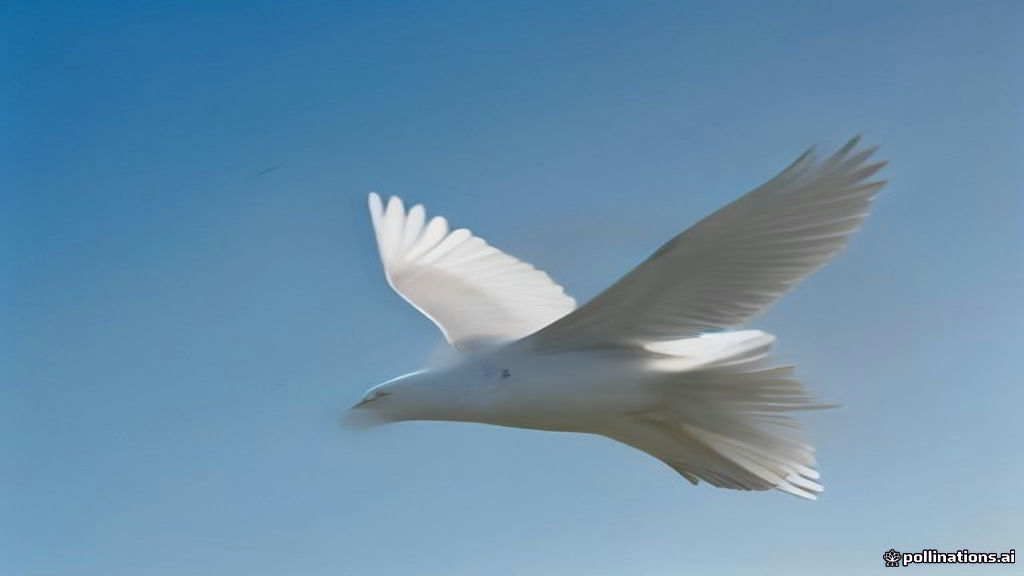
Rigid-wing ornithopters failed for centuries because they treated flight as a simple vertical oscillation. In reality, a flapping wing must perform complex torsion to avoid generating negative lift on the upstroke. By manipulating the wing’s angle of attack during every millisecond of the cycle, Germany’s 450-gram robotic gull flies like life by converting drag into propulsion.
Unsteady Fluid Dynamics Explained
The primary reason early mechanical birds crashed was a fundamental misunderstanding of unsteady fluid dynamics. In steady-state aerodynamics—the physics governing fixed-wing aircraft—air moves smoothly over a static airfoil. However, a bird’s wing exists in a state of constant, violent change. When a rigid wing flaps downward, it creates a high-pressure zone beneath it, generating lift. But as the wing reverses direction for the upstroke, the same rigid geometry forces the top of the wing to strike the oncoming air, creating a “braking” effect that pushes the machine backward and downward.
To overcome this, nature utilizes the elasticity of feathers and tendons to constantly reshape the airfoil. In the development of the SmartBird, Festo engineers realized that the wing must be treated as a flexible membrane capable of shedding vortices. By allowing the wing to twist, the robotic gull avoids the “stall” that occurs when a rigid wing hits the air at an unfavorable angle during the upstroke, effectively turning the air’s resistance into a fluid dynamic asset rather than a catastrophic obstacle.
The Lift vs. Thrust Dilemma
The challenge of avian flight is the simultaneous management of lift (staying airborne) and thrust (moving forward). In conventional aviation, these forces are decoupled: wings provide lift, while propellers or turbines provide thrust. For a bio-inspired robot, these forces must be integrated into a single surface.
| Feature | Rigid-Wing Ornithopter (Failed) | SmartBird Bionic Design (Success) |
|---|---|---|
| Upstroke Physics | Generates negative lift/drag | Generates forward thrust via torsion |
| Wing Geometry | Static/Rigid | Active/Torsional |
| Energy Efficiency | Extremely Low | High (23-watt power consumption) |
| Control Mechanism | Simple oscillation | Complex split-crank + servo twisting |
As the table illustrates, the “SmartBird” succeeds where others failed by utilizing the inner wing for lift and the outer wing for thrust. The inner wing maintains a stable angle of attack, while the outer wing performs a sophisticated “twisting” motion. This bifurcation allows the gull to hover, climb, and cruise by adjusting the intensity of the torsion rather than just the speed of the flap.
How Wind-Tunnel Testing Changed the Design
The breakthrough for the Festo team came through the implementation of Particle Image Velocimetry (PIV). By seeding the air with microscopic tracer particles and illuminating them with high-frequency lasers, engineers were able to visualize the wake produced by a living herring gull in flight.
PIV data revealed a “vortex ring” structure—a series of rotating air masses shed by the wingtips. This confirmed that birds do not simply push air down; they manipulate the air to create low-pressure zones that “pull” them forward. By replicating this vortex shedding through the active twisting of the SmartBird’s carbon-fiber skeleton, the engineers achieved an 80% efficiency rate in converting flapping motion to forward flight. This empirical data proved that the secret to flight wasn’t just in the mechanics of the motor, but in the precise, millisecond-by-millisecond orchestration of the wing’s bionic torsion.
Anatomy of the SmartBird: Materials and Mechanics
Direct Answer: Demonstrating how Germany’s 450-gram robotic gull flies like life, Festo engineered an ultra-lightweight structure utilizing a carbon-fiber skeletal frame wrapped in extruded polyurethane foam skin. Powered by an exceptionally efficient 23-watt architecture, its mechanical core uses a single brushless motor driving a split-crank assembly, coupled with active wingtip torsion micro-servos to decouple lift from propulsion.
To recreate the continuous fluid motion of a living herring gull (Larus argentatus), engineers at the Festo Bionic Learning Network had to solve an extreme mass-to-strength challenge. Traditional aircraft rely on rigid metallic or dense composite structures that provide stationary stiffness under static loads. However, an ornithopter subject to rapid oscillatory flapping experiences violent reversal forces, rotational torque, and continuous structural bending moments. Achieving controlled flight required keeping total mass below 450 grams (0.99 lbs) across a massive 2.0-meter (6.5-foot) wingspan, while maintaining precise mechanical rigidity across all drive components.
Carbon-Fiber and Polyurethane Construction
The structural backbone of SmartBird relies on advanced biomimetic lightweight construction, mirroring the pneumatic, hollow-bone morphology of avian skeletons. The central torso and wing ribs are constructed from custom-molded carbon-fiber-reinforced polymer (CFRP) composite profiles. High-modulus carbon fiber delivers an extraordinary strength-to-weight ratio, preventing structural deflection during high-amplitude downstrokes while keeping inertial resistance during directional changes to an absolute minimum.
Instead of using heavy rigid composite sheets or fragile membrane films to form the aerodynamic wing surfaces, Festo wrapped the skeletal frame in an ultra-thin skin of extruded expanded polyurethane (EPU) foam. Polyurethane foam offers a unique set of physical properties vital for flapping-wing flight:
- Dynamic Compliance: It yields seamlessly to localized torsional twisting without cracking, tearing, or permanently warping over millions of oscillation cycles.
- Airtight Surface Integrity: The smooth, closed-cell surface prevents high-pressure air from bleeding through the wing during the downstroke, maximizing lift generation.
- Minimal Mass Contribution: The skin contributes less than 15% of the total airframe weight, keeping total wing inertia low enough for fast, precise directional adjustments.
The total mass distribution of the 450-gram flight vehicle is tightly budgeted across four distinct operational layers:
| Subsystem Component | Primary Materials Used | Approximate Mass | Functional Role |
|---|---|---|---|
| Skeletal Airframe | Carbon-Fiber Composite (CFRP) | ~120 grams | Primary load-bearing chassis, ribs, and wing spars |
| Aerodynamic Skin | Extruded Polyurethane (EPU) Foam | ~50 grams | Flexible aerodynamic lifting surface skin |
| Actuation & Drives | Hardened Alloy Gears, Bearings, Servos | ~130 grams | Split-crank mechanism and active torsion drive |
| Avionics & Power | LiPo Cells, Microcontrollers, Sensors | ~150 grams | 23W energy storage, real-time control, telemetry |
The 23-Watt Power Architecture
The defining flight efficiency of SmartBird lies in its minimal energy consumption. Operating at a nominal electrical power input of just 23 Watts during steady level flight, the aircraft consumes less energy than a standard household LED desk lamp. This efficiency enables autonomous flight powered entirely by an internal onboard two-cell Lithium-Polymer (LiPo) battery pack, eliminating the need for external power tethers.
At the center of this power architecture is a high-efficiency outrunner brushless DC (BLDC) motor optimized for maximum torque density. Because high-speed electric motors operate efficiently at thousands of RPM, but bird wings flap at a low, deliberate frequency of roughly 1.5 to 2.5 Hz (strokes per second), Festo developed a multi-stage miniaturized reduction gearbox. This transmission converts high-RPM motor rotation into extreme low-speed rotational torque without introducing excessive frictional losses or backlash.
To quantify the extraordinary engineering efficiency demonstrated by Germany’s 450-gram robotic gull flies like life platform, consider how its power metrics compare against standard commercial unmanned aerial vehicle (UAV) designs of equivalent scale:
| Flight Metric | Festo SmartBird (Biomimetic) | 2.0m Fixed-Wing Survey Drone | Standard Electric Quadcopter |
|---|---|---|---|
| Total Mass | 450 grams | 1,200 – 2,500 grams | 1,800 – 3,500 grams |
| Cruise Power Input | 23 Watts | 80 – 150 Watts | 250 – 450 Watts |
| Drive System | Flapping Split-Crank | Single Rear/Front Propeller | 4x High-RPM Rotors |
| Aero Efficiency Factor | Extremely High (~80% thrust conversion) | High (Fixed Lift Surface) | Low (Direct Power Lift) |
The Split-Crank Mechanism Explained
The mechanical core of SmartBird is its central split-crank mechanism. In conventional ornithopter designs, a single crank pin flaps both wings uniformly up and down in a rigid plane. This simplistic motion creates the severe aerodynamic paradox that plagued aviation pioneers for centuries: flapping upward forces air onto the top of the wing, destroying lift and pulling the machine backward.
Festo solved this through complex mechanical kinematics. The central brushless drive motor rotates a primary dual-articulated split crankshaft. This crankshaft converts continuous 360-degree rotational motion into balanced, reciprocating vertical flapping strokes across the inner wing sections. However, the outer wing sections are decoupled from this rigid motion via dynamic secondary pivot joints.
To understand how this mechanical architecture generates continuous forward thrust alongside constant vertical lift, trace the motion across a complete flapping cycle:
- Downstroke Phase (Thrust & Lift Generation): As the central split-crank pulls the inner arm wing downward, dynamic digital micro-servo motors located inside the outer wing structure actively twist the leading edge of the outer wing downward (negative twist angle). This converts 80% of the downward flapping force into forward-directed horizontal thrust, pulling the aircraft forward while maintaining air speed across the lifting surfaces.
- Bottom Dead Center Transition: At the lowest inflection point of the stroke, internal sensors calculate wing position within milliseconds. The outer wing servos rapidly adjust pitch to prevent dynamic airflow stall as directional momentum shifts.
- Upstroke Phase (Drag & Negative Lift Suppression): As the split-crank pushes the inner arm wing back upward, the outer wing servos actively rotate the wingtip leading edge upward (positive pitch). By angling the wing precisely into the upward relative wind, air slides smoothly past the wing surface without generating downward force or adverse backward drag.
- Top Dead Center Reversal: The mechanism realigns the inner and outer wings into a high-angle-of-attack configuration, instantly preparing the airfoil to catch the air at the onset of the next powerful downstroke.
By continuously unifying this mechanical split-crank movement with active wingtip torsion, SmartBird achieves complete aerodynamic control without requiring traditional tail rudders or spinning propellers—yielding an ultra-efficient, highly responsive bionic system that flies using the exact principles perfected by nature.
Active Wingtip Torsion: The Secret to Flight

Active wingtip torsion is the biomechanical mechanism that allows Germany’s 450-gram robotic gull to achieve efficient flight by twisting the wing’s distal section during the flapping cycle. By dynamically adjusting the angle of attack in milliseconds, the system transforms the upstroke from a drag-inducing movement into a propulsion-generating force, effectively mimicking the complex flight dynamics of a living herring gull.
How Servo Motors Mimic Avian Wrist Movement
In biological flight, the avian wrist joint serves as the critical pivot for controlling the primary feathers, allowing the bird to alter its wing geometry mid-stroke. The Festo SmartBird replicates this by integrating high-speed digital servo motors directly into the wing’s structural frame. Unlike traditional ornithopters that rely on rigid, flapping paddles, the SmartBird employs a sophisticated linkage system that translates rotary motor output into precise torsional displacement.
These servo motors act as the robotic “muscles,” pulling on carbon-fiber tendons that force the outer wing to rotate along its longitudinal axis. This allows the machine to adjust its torsion—the degree of twist—in real-time based on flight velocity and lift requirements. By mimicking the wrist’s ability to “feather” the wing, the robot creates a variable-geometry airfoil that maintains optimal aerodynamic efficiency throughout the entire range of motion, a feat previously impossible with fixed-geometry mechanical wings.
Calculating the 80% Thrust Conversion
The efficiency of the SmartBird is quantified by its ability to convert 80% of its total flapping energy into forward thrust and lift. This high-efficiency metric is the direct result of minimizing “waste” energy—specifically the energy usually lost to drag during the upward phase of the wing beat. By calculating the fluid dynamics through Computational Fluid Dynamics (CFD), the engineers ensured that the torsion profile perfectly matches the velocity of the air flowing over the wing.
| Flight Phase | Mechanical Action | Aerodynamic Result |
|---|---|---|
| Downstroke | Leading edge tilts downward | Maximum lift generation |
| Upstroke | Leading edge twists upward | Thrust generation (Anti-drag) |
| Transition | Rapid servo realignment | Vortex shedding for stability |
Managing the Upstroke and Downstroke Cycles
The core challenge in ornithopter engineering is the “upstroke penalty.” If a wing remains rigid, the upstroke creates a downward force that negates the lift generated by the downstroke. The SmartBird solves this through an active, phase-shifted timing sequence. As the wing moves upward, the servo motors initiate a rapid twist, shifting the angle of attack to a negative value relative to the oncoming air. This effectively turns the wing into a sail that slices through the air with minimal resistance, while simultaneously generating a forward vector.
The synchronization of these cycles is governed by an onboard microcontroller that monitors the wing position via integrated sensors. This closed-loop feedback system ensures that the torsion frequency is perfectly harmonic with the flapping frequency. By managing the wing’s elasticity—using a polyurethane skin that maintains tension—the SmartBird prevents the energy dissipation typically seen in mechanical joints, allowing the 450-gram craft to sustain flight on a mere 23 watts of power, comparable to the energy efficiency seen in natural avian flight patterns.
Autonomous Navigation and Future Robotic Applications
The autonomous capabilities of Germany’s 450-gram robotic gull, SmartBird, extend far beyond simple aerial locomotion, representing a paradigm shift in how we integrate bio-inspired robotics into real-world environments. By utilizing integrated sensor suites and active flight control algorithms, this technology enables silent, high-efficiency navigation that mimics biological flight patterns for precision surveillance, environmental monitoring, and low-impact research applications.
Real-Time Flight Control Systems
At the core of the SmartBird’s operational success is a sophisticated real-time flight control system that processes telemetry data at millisecond intervals. Unlike traditional drones that rely on GPS waypoints and fixed-wing stabilization, this robotic gull utilizes a closed-loop control system that monitors the wing’s torsion and flapping frequency in relation to the current air density and velocity. This allows the system to autonomously adjust its flight posture to compensate for sudden gusts, effectively managing the “aerodynamic paradox” that previously hindered ornithopter flight.
The system leverages inertial measurement units (IMUs) and an onboard microprocessor to modulate the 23-watt motor output, ensuring that the wingtip torsion remains synchronized with the fuselage movement. This high-frequency feedback loop allows the robot to maintain a stable flight path even when the wings are in the high-stress phases of the flapping cycle. By offloading complex aerodynamic calculations to onboard firmware, the aircraft achieves a level of autonomous stability that allows it to navigate complex air currents with minimal human intervention.
Potential Use Cases in Surveillance and Research
The integration of biomimetic flight technology offers distinct advantages over traditional rotary-wing drones, particularly in sensitive environments. Because SmartBird generates lift through flapping rather than high-speed propeller rotation, it operates with a significantly lower acoustic signature. This makes it an ideal candidate for wildlife observation, where the goal is to monitor avian populations or terrestrial animals without causing the “observer effect” that often startles subjects.
| Feature | Traditional Multi-Rotor Drone | SmartBird Biomimetic Robot |
|---|---|---|
| Acoustic Signature | High (High-pitched blade noise) | Very Low (Natural flapping sound) |
| Energy Efficiency | Low (Requires constant power) | High (Gliding capability/Active torsion) |
| Environmental Impact | High (Wind turbulence/Deterrence) | Low (Naturalistic flight profile) |
| Primary Use Case | Heavy lift/Photography | Surveillance/Environmental Research |
Beyond surveillance, the technology provides a non-invasive platform for atmospheric research. By mimicking the flight of a natural herring gull, the robot can merge into flocks, allowing researchers to gather data on avian migration patterns, wind currents at high altitudes, and localized climate data without disrupting the natural behavior of the birds being studied.
Scaling Biomimetic Flight Technology
Scaling the 450-gram SmartBird prototype for industrial applications involves overcoming the “square-cube law,” where increasing the size of a flapping-wing vehicle exponentially increases the structural load on the carbon-fiber skeleton. Current research at the Festo Bionic Learning Network is focused on developing lightweight, high-tensile-strength synthetic materials that can withstand the fatigue of continuous torsion without sacrificing the flexibility required for lifelike flight.
Future iterations are expected to incorporate distributed intelligence, where multiple robotic gulls communicate in a swarm-like configuration to cover larger geographic areas. To reach production-level utility, engineers are prioritizing three specific development tracks:
- Energy Harvesting: Integrating thin-film, flexible solar cells into the wing membrane to extend operational flight time.
- Autonomous Perching: Developing landing gear capable of gripping varied surfaces, allowing the robot to remain stationary and conserve power while maintaining a surveillance position.
- Dynamic Load Bearing: Refining the split-crank mechanism to allow for the carriage of modular sensor payloads (such as LiDAR or multispectral cameras) without compromising the vehicle’s specific power-to-weight ratio.
By moving from a single-prototype model to a modular, scalable platform, this biomimetic approach ensures that the insights gained from the herring gull’s flight mechanics will eventually influence the design of long-endurance, eco-friendly aerial monitoring systems worldwide.
Conclusion: The Legacy of Germany’s 450-Gram Robotic Gull
Germany’s 450-gram robotic gull, known as SmartBird, represents a paradigm shift in aerospace engineering by successfully merging lift and propulsion into a single, flapping-wing system. By mastering active wingtip torsion, Festo proved that biomimetic flight is not only possible but significantly more energy-efficient than traditional rotary-wing or fixed-wing architectures.
Refining the Future of Sustainable Aviation
The legacy of the SmartBird project extends far beyond the novelty of a mechanical bird. It serves as a proof-of-concept for ultra-lightweight, low-energy flight systems that could redefine how we approach drone technology and sustainable aviation. Traditional Unmanned Aerial Vehicles (UAVs) rely on high-RPM propellers, which are inherently noisy, dangerous to bystanders, and inefficient at low Reynolds numbers. In contrast, the SmartBird’s ability to generate thrust through fluid-dynamic efficiency—rather than raw mechanical force—paves the way for silent, bird-like drones capable of operating in dense urban environments or sensitive wildlife habitats without disruption.
Furthermore, the materials science developed for this project—specifically the integration of carbon-fiber skeletons with flexible polyurethane skins—offers a blueprint for “soft robotics” in aviation. By moving away from rigid, heavy airframes toward adaptive, tension-based structures, future engineers can design aircraft that dynamically alter their shape to optimize for turbulence, payload weight, or battery conservation. This transition from “brute force” flight to “intelligent, adaptive” flight is the cornerstone of the next generation of sustainable aerial mobility.
The Impact on Modern Mechatronics
The technical triumph of Festo’s Bionic Learning Network lies in the precise synchronization of mechatronic control loops. The ability to coordinate servo-driven wingtip torsion with the primary flapping mechanism at millisecond intervals represents a significant leap in real-time sensor fusion. This mastery over unsteady fluid dynamics has provided researchers with a roadmap for applying biomimicry to industrial automation, where movement needs to be both powerful and fluid.
| Feature | Traditional Fixed-Wing Drone | SmartBird (Biomimetic) |
|---|---|---|
| Propulsion Method | Rotary Propeller / Turbine | Active Wingtip Torsion |
| Energy Efficiency | High (at high speeds) | Superior (at low-to-medium speeds) |
| Acoustic Profile | High (Whine/Turbulence) | Extremely Low (Natural) |
| Structural Design | Rigid / Fixed Airframe | Adaptive / Flexible Skin |
The implications for modern mechatronics are profound. By studying the principles of biomimetics, engineers are no longer limited to linear mechanical movements. Instead, they are adopting non-linear, elastic actuation, which mimics the natural efficiency of muscle-tendon systems. As we look forward, the lessons learned from this 450-gram gull—specifically the 80% efficiency rate in converting flapping to thrust—will likely be integrated into everything from underwater propulsion systems to Festo’s ongoing research into adaptive grippers and soft-robotic manipulators. The SmartBird did not just fly; it signaled the end of the “rigid” era in robotics.
Conclusion & Key Next Steps
The development of Germany’s 450-gram robotic gull, known as the SmartBird, represents a monumental shift in biomimetic engineering. By successfully emulating the complex flight mechanics of a herring gull, Festo has moved beyond traditional aeronautical design—which relies on static wings and propellers—toward a future defined by adaptive, energy-efficient, and highly agile autonomous systems. This breakthrough proves that nature’s blueprint remains the most sophisticated guide for solving modern challenges in aerodynamics and robotics.
As we look toward the future, the implications of this technology extend far beyond the laboratory. The ability to achieve flight through active torsion and wing-flapping efficiency paves the way for a new generation of drones capable of navigating complex environments with minimal energy consumption. For engineers and researchers, the SmartBird serves as a definitive case study in how lightweight, carbon-fiber construction and advanced sensor integration can harmonize to master the skies, solidifying Germany’s 450-gram robotic gull flies like life as the gold standard for biomimetic innovation.
Frequently Asked Questions
Frequently Asked Questions (FAQ)
Why is the SmartBird considered a breakthrough in robotics?
It is the first ornithopter to successfully combine lift and thrust in one wing using active torsion, achieving autonomous flight without a propeller, which had eluded engineers for 500 years.
How much does the Festo SmartBird weigh?
The Festo SmartBird weighs exactly 450 grams (0.99 pounds) and features a 2-meter wingspan, making it an ultra-lightweight marvel of engineering.
What is active wingtip torsion?
Active wingtip torsion is a mechanical process where servo motors twist the outer wing section during flight, allowing the bird to generate forward thrust on both the upstroke and downstroke.
Does the SmartBird use a propeller to fly?
No, the SmartBird does not use propellers or jet turbines. It achieves flight entirely through the flapping motion of its wings, mimicking the natural flight of a herring gull.
What materials are used to build the SmartBird?
The SmartBird is constructed from an ultra-lightweight carbon-fiber skeleton covered in a thin, flexible polyurethane foam skin to minimize weight while maximizing aerodynamic efficiency.