
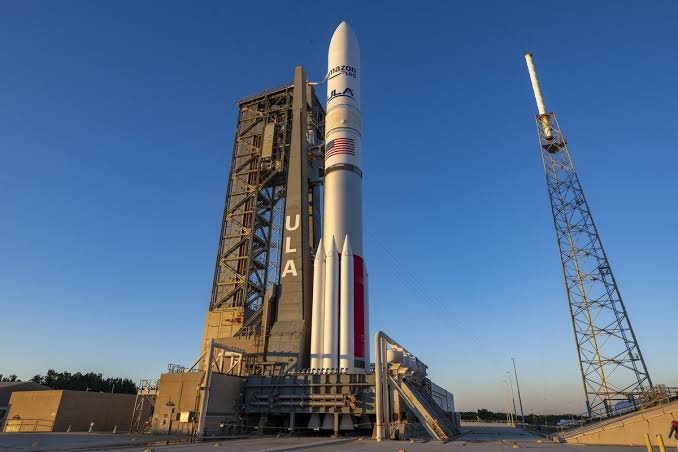
The ULA Vulcan rocket launch ended in a total mission failure on Sunday, November 15, 2026, after an unrecoverable anomaly occurred roughly 10 minutes into flight. Lifting off from Cape Canaveral Space Force Station in Florida at 12:40 p.m. EST, the United Launch Alliance booster failed to reach orbit, resulting in the loss of all 40 Amazon Leo broadband satellites aboard.
The mishap marks the first outright mission loss in the 20-year history of United Launch Alliance (ULA), a joint venture formed by Boeing and Lockheed Martin in 2006. The mission was intended as a high-stakes return to flight following a nine-month grounding caused by solid rocket booster nozzle anomalies earlier in 2026.
What Happened During the ULA Vulcan Rocket Launch?
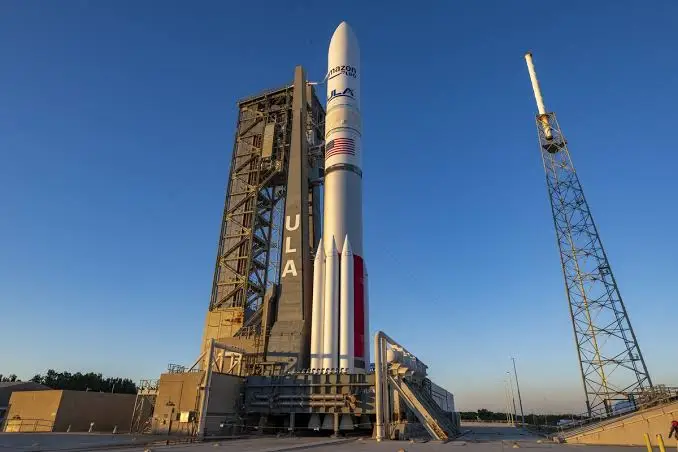
The Vulcan Centaur rocket—flying for the first time in its heavy-lift configuration equipped with six strap-on solid rocket boosters (SRBs)—cleared Space Launch Complex 41 at 12:40:30 p.m. EST. During the initial ascent phase, all six upgraded SRBs appeared to burn nominally and separated cleanly from the core stage.
However, approximately 10 minutes after liftoff, flight telemetry indicated a critical malfunction during the upper-stage transition. Preliminary flight data shows the booster stage’s twin Blue Origin-built BE-4 engines burned roughly 30 seconds past their scheduled cutoff before the vehicle lost attitude control. Although the Centaur V upper stage ignited its dual RL10 engines to correct the trajectory, the rocket failed to achieve orbital velocity.
“Based on data received by our Launch Director, we confirm that the Vulcan vehicle launched from Space Launch Complex 41 suffered an anomaly 10 minutes into the flight and failed to deliver the Amazon mission to orbit.” United Launch Alliance Official Statement, Nov. 15, 2026
Mission Overview: ULA Vulcan Leo-1 Flight Data
| Mission Parameter | Flight Details |
|---|---|
| Launch Vehicle | ULA Vulcan Centaur (VC6 configuration) |
| Launch Date & Time | November 15, 2026, at 12:40:30 p.m. EST (17:40:30 UTC) |
| Launch Site | Space Launch Complex 41, Cape Canaveral, Florida |
| Payload | 40 Amazon Leo (formerly Project Kuiper) broadband satellites |
| Time of Anomaly | T+10 minutes (Upper-stage / BE-4 cutoff phase) |
| Mission Outcome | Total failure; vehicle and payload lost |
Why the Failure Is a Major Setback for Amazon Leo and U.S. Spaceflight
Beyond breaking ULA’s spotless delivery streak since 2006, the loss creates immediate scheduling and capacity bottlenecks across the commercial and national security launch sectors:
- Amazon Leo Constellation Delays: Sunday’s flight was the first of 38 Vulcan missions Amazon procured to deploy its 3,236-satellite competitor to SpaceX’s Starlink. With 398 satellites currently in orbit, Amazon faces a strict Federal Communications Commission (FCC) deadline to deploy its full first-generation network by July 2029.
- U.S. Heavy-Lift Bottleneck: ULA is retiring its legacy Atlas V fleet, leaving Vulcan as its sole future workhorse. With Blue Origin’s New Glenn rocket also grounded following a May 2026 launchpad incident, U.S. commercial and defense payloads face severe reliance on SpaceX.
- National Security Certification Hold: The U.S. Space Force had already paused national security payloads on Vulcan following an SRB nozzle burn-through in February 2026. A fresh Federal Aviation Administration (FAA) and ULA anomaly investigation will likely delay Space Force recertification well into 2027.
Frequently Asked Questions (FAQ)
Why did the ULA Vulcan rocket fail on November 15, 2026?
The ULA Vulcan rocket suffered an anomaly roughly 10 minutes after liftoff during the transition between booster cutoff and upper-stage flight. Early telemetry indicates the BE-4 main engines burned longer than planned, causing the vehicle to lose trajectory control before reaching orbit.
What payload was aboard the failed ULA Vulcan rocket launch?
The rocket was carrying 40 low-Earth orbit broadband internet satellites for Amazon Leo, the satellite constellation formerly known as Project Kuiper. All 40 satellites were destroyed when the rocket failed to reach orbit.
Has a ULA Vulcan rocket ever failed before?
No. November 15, 2026, marked the first total mission failure in United Launch Alliance’s 20-year history. While Vulcan experienced solid rocket booster nozzle damage on its second flight (October 2024) and fourth flight (February 2026), both previous missions still successfully delivered their payloads to orbit.